
Medford, Massachusetts / Gas & Combi Boiler Repair
Gas & Combi Boiler Repair in Medford
Separate gas boiler heating faults from combi hot-water problems. Explore components, safe observations, and repair questions for Medford homes.
- System-specific guidance
- Clear repair questions
- You approve the work
Know what to ask
Start with the right diagnosis
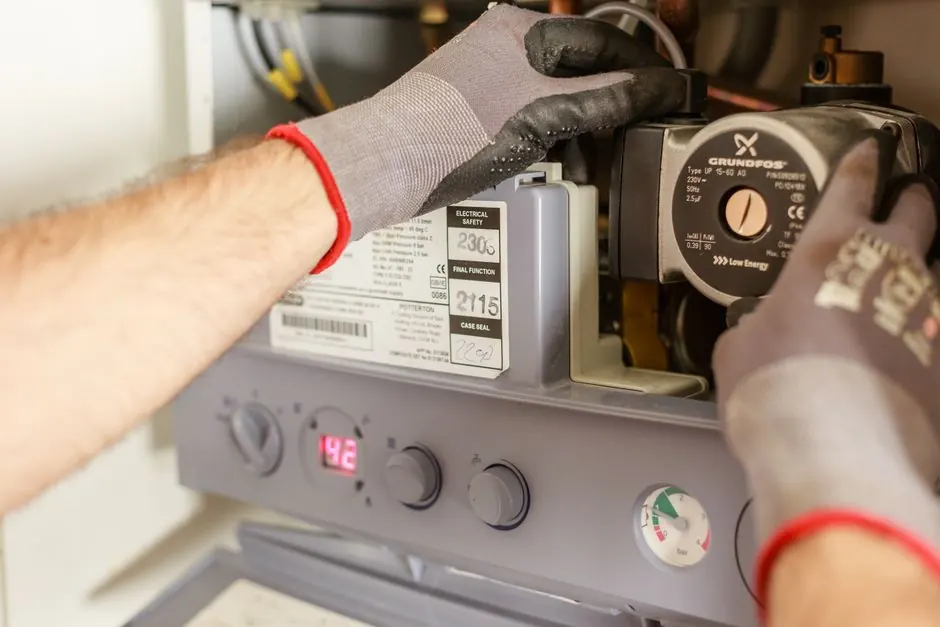
A gas boiler can provide space heating alone, while a combination boiler also produces domestic hot water within the appliance. That distinction matters when something stops working. A home may still have heating while the shower turns cold, or reliable tap water while the radiators remain cool. The most useful service request identifies which function failed, when it fails, and what the boiler reports, rather than treating every symptom as the same gas-boiler problem.
01 / SERVICE GUIDE
Heating and hot-water symptoms mean different things
Heating works, but tap water fluctuates
Intermittent hot water can involve demand detection, a water-side restriction, temperature sensing, or the appliance’s changeover arrangement. It can also originate outside the boiler, such as at a particular fixture. Tell the provider whether every hot-water outlet is affected, whether the problem occurs at low or high flow, and whether another outlet was being used. This helps distinguish an appliance complaint from a distribution or fixture issue.
Hot water works, but rooms remain cold
If domestic hot water is reliable, some of the appliance’s heat-producing functions may still operate. The investigation then needs to consider the heating demand, controls, circulation, and zone arrangement. A combi unit may prioritize a hot-water demand over space heating by design, but an extended interruption deserves assessment. Note whether radiators recover after hot-water use ends instead of assuming that the temporary change is itself a fault.
Both functions stop or lock out
A shared interruption may point toward an issue affecting power, fuel, combustion permissions, sensors, or another common part of the operating sequence. The code displayed can guide a trained provider, but it rarely proves which component must be replaced. Record the exact code and the circumstances. Avoid interpreting a list from a different manufacturer as a repair instruction for your model.
02 / SERVICE GUIDE
Inside the diagnostic picture
Heat exchange and water pathways
The appliance transfers combustion heat into water, but the pathways differ between designs. Some combi boilers use a separate domestic-water heat exchanger, while other designs arrange heat exchange differently. The provider should consult the correct technical documentation before discussing cleaning or replacement. A phrase such as “blocked heat exchanger” should be supported by observations or measurements appropriate to that particular model.
Demand sensing and changeover
The boiler needs to recognize a heating request or hot-water draw and respond through the appropriate control sequence. Depending on the design, flow sensing and a changeover valve or other hydraulic arrangement may be involved. A stuck component, misleading signal, or external control issue can produce similar customer complaints. Ask which operating state was requested and what actually happened during the test.
Combustion, venting, and condensate
Gas supply, ignition, flame supervision, air supply, and exhaust routing operate together. Condensing models also produce condensate that must drain through the intended arrangement. A drainage obstruction or venting problem is not corrected by changing a room thermostat. These areas require qualified assessment; a homeowner should not disconnect a vent, alter gas settings, or remove a sealed combustion cover to investigate.
03 / SERVICE GUIDE
How a focused service visit should proceed
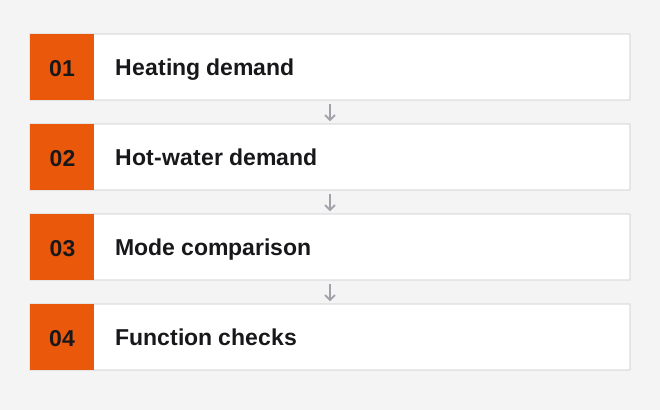
Confirm the model and reported demand
Have the full model designation available if its label is safely visible. The provider can establish whether the appliance is heating-only or combination, which controls are connected, and what documentation applies. Explain whether the fault occurs from a cold start, after a long hot-water draw, or only during simultaneous use. These distinctions allow the reported symptom to be reproduced more meaningfully.
Compare operation in each relevant mode
A suitable investigation should distinguish a call for space heating from a domestic hot-water demand. The provider may compare display information, temperatures, flow behavior, and control response in the applicable modes. If the problem is intermittent, a normal result during a brief visit does not establish that nothing is wrong. Your timeline may help identify conditions that were not present during the first test.
Assess external influences
The appliance does not operate in isolation. Heating circuits, thermostats, mixing arrangements, incoming water conditions, and fixtures can influence its behavior. A provider should consider the boundary between the boiler and the connected system before recommending an internal part. For example, one problematic shower deserves a different investigation from a whole-property loss of domestic hot water.
Verify the repair against the complaint
After work, ask for confirmation that the original symptom was checked in the relevant mode. A heating test alone does not resolve a hot-water complaint, and a hot-water draw alone does not confirm all heating zones. Any combustion or safety checks required by the work and manufacturer should be completed by the qualified provider, with findings explained in understandable terms.
04 / SERVICE GUIDE
Gas-boiler safety boundaries
Leave the building if you suspect a gas escape or a carbon monoxide alarm activates, and contact emergency services or the utility from a safe location. Do not attempt to establish whether the boiler is responsible before seeking help. Avoid operating electrical switches or using a flame to check for a leak. This service-request page is not a substitute for emergency assistance.
For ordinary faults, keep appliance covers and vent connections in place. Do not bypass protective controls or repeatedly reset an unresolved ignition lockout. Follow only the owner procedures described for the exact appliance and stop if the behavior differs from those instructions. Report unexplained soot, unusual odors, visible water, or damaged external venting to the provider rather than trying to correct them yourself.
Ready to discuss your heating problem?
Share the symptoms and confirm the next step with an independent provider.
05 / SERVICE GUIDE
Choosing a useful repair scope
Ask the provider to distinguish diagnosis, maintenance, and repair in the quotation. Cleaning an appropriate water-side component, replacing a failed sensor, correcting an external control problem, and repairing a combustion-related defect are different scopes. Each should be linked to evidence from the investigation. A service package should not imply that every combi boiler automatically needs every available cleaning treatment.
Discuss parts availability and the consequences of leaving the appliance out of service. If a component is obsolete or a repair is extensive, request a reasoned comparison with replacement rather than a blanket recommendation based on age alone. The installation’s condition, connected heating system, and remaining faults matter alongside the price of the immediate part.
06 / SERVICE GUIDE
Prepare a concise record before requesting help
Write down whether the problem affects heating, tap water, or both. Include which outlets or rooms are affected, the timing of failures, and any visible code. Tell the provider about recent plumbing work, changes to a thermostat, an interruption to water or power, or earlier attempts to reset the appliance. You do not need to dismantle anything to provide useful information.
For managed properties, establish who can approve work and provide access. A tenant’s report of fluctuating shower temperature and a manager’s report of boiler lockouts may describe the same event from different viewpoints. Combining those observations before the appointment can reduce confusion without making assumptions about the cause.
07 / SERVICE GUIDE
Gas and combination boiler questions
Is a combi boiler the same as a tankless water heater?
No. A combi boiler is intended to serve space heating as well as domestic hot water. A tankless water heater may serve only domestic water unless it is part of a specifically designed arrangement. Give the provider the model number rather than relying on a general description such as “wall-mounted water heater.”
Does an error code identify the replacement part?
Not necessarily. A code describes a detected condition or failed operating sequence. The cause may involve a component, wiring, fuel or water conditions, or a connected system issue. A qualified provider should interpret the code using the correct model documentation and verify the diagnosis before replacing parts.
Should poor hot-water performance be fixed by flushing?
Only if the investigation supports an appropriate cleaning procedure for the affected circuit. A domestic-water restriction, heating-water contamination, and an ignition problem are not the same defect. Review maintenance and power flushing for the distinction, and ask the provider to explain why the proposed method suits your appliance.
Where can I request help for my system?
Use Request Service with the heating-versus-hot-water details above. If ignition repeatedly fails, the pilot and ignition guide may also help you describe the symptom. Boiler Repair Pro makes referrals; independent providers confirm coverage, carry out diagnosis, and set the terms of any repair.
Sources & further reading
Manufacturer references illustrate model-specific requirements. Use the manual for your own equipment; these references are not universal repair instructions.
Take the next step.
Tell us where help is needed and what your system is doing.