
Medford, Massachusetts / Emergency Boiler Repair
Emergency Boiler Repair in Medford
Describe a no-heat failure, understand professional triage, and request urgent boiler service in Medford. Availability is confirmed by the provider.
- System-specific guidance
- Clear repair questions
- You approve the work
Know what to ask
Start with the right diagnosis
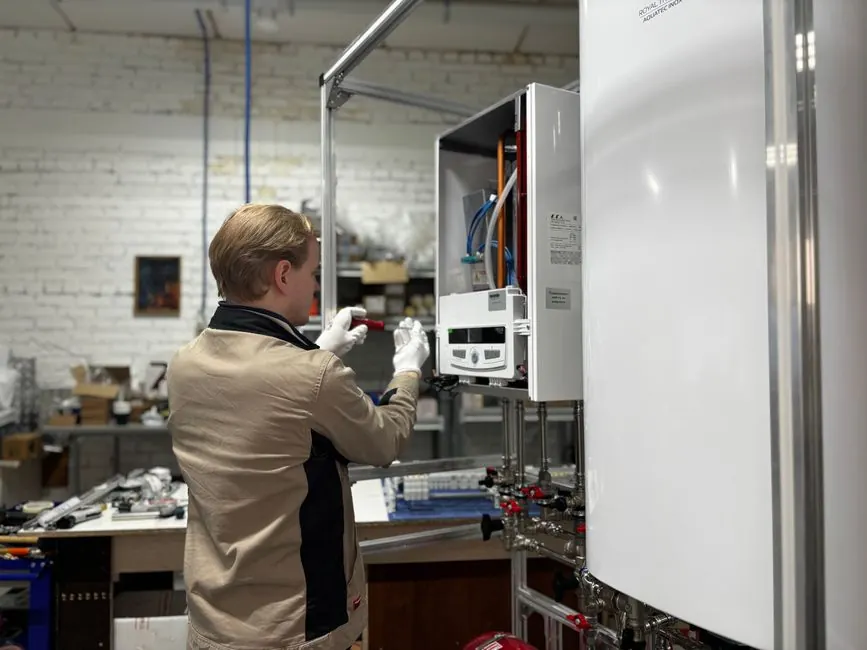
When heating stops unexpectedly, the first useful decision is whether the situation is a heating-service problem or an immediate safety emergency. A cold radiator, an ignition lockout, and a carbon monoxide alarm require different responses. This page explains what information helps an independent provider triage a no-heat request, how a professional separates control problems from mechanical failures, and what should be confirmed before a boiler is returned to operation.
01 / SERVICE GUIDE
Safety comes before a service request
If you smell gas, hear an unexplained gas-like hissing sound, or a carbon monoxide alarm activates, leave the building and contact emergency services or your gas utility from a safe place. Do not remain inside to photograph the boiler, operate switches, or submit an online form. A referral website is not an emergency dispatch service. Smoke, fire, or a suspected fuel leak also belongs with the appropriate emergency responders rather than routine appointment scheduling.
For a heating failure without those warning signs, tell the service provider if anyone in the property is particularly vulnerable to cold. Availability, travel time, and repair completion must be confirmed directly; making a request does not guarantee an immediate visit. Do not use an oven or an outdoor combustion appliance to heat occupied rooms while waiting.
02 / SERVICE GUIDE
Three patterns worth distinguishing
Everything is cold
If every heating zone has stopped, record whether the boiler display is illuminated and whether domestic hot water is also affected. A dark display suggests a different diagnostic path from a lit display showing a fault code. A provider may investigate the electrical supply, control permissions, fuel supply, or a common system component. The observation is useful; opening a control enclosure or repeatedly resetting a breaker is not an appropriate homeowner diagnostic step.
One area has lost heat
A warm boiler with a cold floor or addition does not automatically mean the boiler itself has failed. A thermostat, zone valve, circulator, or distribution restriction may prevent heat reaching one circuit. Identify which rooms are affected and whether neighboring rooms on the same thermostat behave similarly. This allows the provider to compare the heat demand with the equipment serving that area instead of assuming a whole-system replacement is needed.
The boiler starts, then stops
Repeated short runs or a lockout after ignition can involve temperature limits, circulation, flame proving, or another protective control. Note how long the run lasts and what the display shows afterward. A safety shutdown is information, not an obstacle to defeat. Do not bypass a switch, defeat a low-water control, or keep clearing a fault until the burner happens to stay on.
03 / SERVICE GUIDE
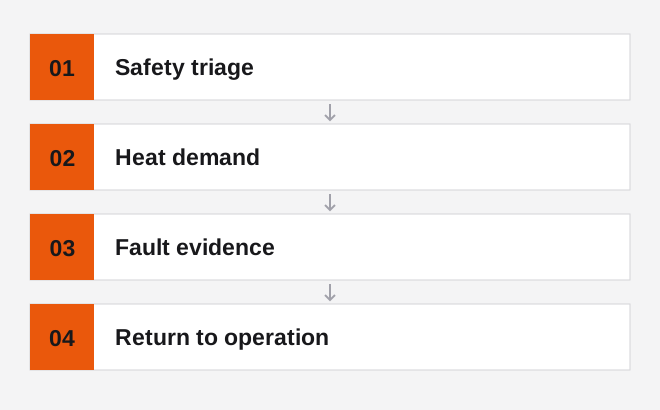
A professional no-heat investigation
Establish the operating conditions
The provider should identify the exact boiler and fuel type, review the reported symptoms, and determine whether the equipment can be approached safely. Recent work, a power interruption, a fuel delivery, or a change in thermostat settings can help establish a timeline. Photographs of externally visible labels may help with preparation, but a photograph alone cannot establish the condition of internal parts or combustion safety.
Follow the demand through the controls
The next question is whether a legitimate call for heat reaches the boiler and whether its safety controls permit operation. Qualified personnel can compare thermostat demand, zone-control output, and the appliance’s operating sequence using its documentation. A control that withholds permission may be doing its job correctly. Diagnosis should establish why the signal is absent before replacing the board, thermostat, or sensor associated with it.
Separate heat production from circulation
A burner can operate while useful heat fails to reach the building. The provider may compare boiler supply and return conditions, inspect the relevant circulator or steam distribution arrangement, and check whether valves and zones respond as intended. The tests differ between hot-water and steam systems. A universal pressure target, a generic reset procedure, or a single online troubleshooting chart is not a substitute for the correct manual.
Confirm the fault and agree the scope
Before authorizing repairs, ask what failed, what evidence supports that conclusion, and whether another defect contributed. A failed pump, for example, may not explain every symptom if controls or distribution issues are also present. The proposed scope should distinguish the immediate repair from optional maintenance, any further investigation, and parts that are unavailable during the first visit.
04 / SERVICE GUIDE
Components involved in an urgent shutdown
Operating and limit controls
The operating control manages normal heat demand; protective limits interrupt operation when monitored conditions are outside the permitted range. Their exact functions depend on the appliance. A provider should identify the control involved, not describe every shutdown as a bad thermostat. Replacing a limit without understanding the condition that activated it can leave the underlying problem unresolved.
Fuel and ignition equipment
Gas and oil systems use different arrangements to admit fuel, establish ignition, and verify a flame. A no-heat call may require a provider with experience in the specific burner and control family. State the fuel type when requesting help. Avoid ordering an ignition part based solely on a fault message, because the message may report a failed sequence rather than a failed component.
Water-side or steam-side equipment
Circulators, zone valves, air-management components, low-water devices, and condensate-return arrangements can all affect operation. Only some of these appear on any particular installation. The useful question is which part belongs to your system and how its behavior was checked. A component list from another house should not become the repair specification for yours.
Ready to discuss your heating problem?
Share the symptoms and confirm the next step with an independent provider.
05 / SERVICE GUIDE
Information that improves the first call
Describe the problem in ordinary language: “the display is on but every radiator is cold” is more helpful than “the boiler is broken.” Have the property location, fuel type, make and model if visible, and fault code ready. Mention whether the issue began suddenly or developed over several days, whether water is visible, and whether any recent work changed the system.
Explain access constraints before an appointment is agreed. A locked basement, a tenant-held mechanical-room key, or a managed building’s access policy can affect the visit. Identify who can approve diagnostic charges and additional repairs. For rented or shared premises, involve the responsible owner or manager rather than authorizing work on equipment you do not control.
06 / SERVICE GUIDE
Repair completion and temporary arrangements
Ask the provider to explain what was tested after the repair: successful startup, sustained operation, response to a heat demand, and the relevant safety or distribution checks. A warm pipe immediately after startup is not the same as confirming that the previously cold zone now responds. Where a return visit is necessary, obtain the remaining scope and any operating restrictions in writing.
If the boiler must remain out of service, discuss safe temporary arrangements with the provider and the property decision-maker. Do not assume that a successful restart makes continued operation appropriate. Keep records of the diagnosed fault, replaced parts, and any unresolved recommendation so the next provider does not have to reconstruct the event from memory.
07 / SERVICE GUIDE
Emergency boiler service questions
Does emergency service mean a guaranteed arrival time?
No. Ask the independent provider to confirm whether they can attend, the expected appointment window, and any urgent-call charges. This website does not promise a response time or maintain its own technician dispatch fleet. If circumstances change while waiting, reassess whether emergency responders rather than a repair appointment are needed.
Should I reset the boiler before calling?
Only follow an owner procedure expressly permitted by the manual for your exact model, and never do so where there is a suspected gas, oil, combustion, or electrical hazard. Repeated lockouts need investigation. Tell the provider about any reset already attempted and preserve the fault code if it is safe to observe it.
Can an urgent visit guarantee a completed repair?
An initial visit may establish the diagnosis without completing the repair. Required parts, access, or additional testing can affect completion. Confirm the diagnostic fee, what the first visit includes, and how further work will be authorized. Do not treat an appointment confirmation as a fixed-price repair agreement.
Which related service should I choose?
Use leak and pressure repair for visible water or changing gauge readings, or pilot and ignition repair for recurring ignition faults. If you cannot identify the category, describe the symptoms through Request Service. Boiler Repair Pro connects customers with independent providers; the provider evaluates the equipment and performs any work.
Sources & further reading
Manufacturer references illustrate model-specific requirements. Use the manual for your own equipment; these references are not universal repair instructions.
Take the next step.
Tell us where help is needed and what your system is doing.