
Medford, Massachusetts / Boiler Leak & Pressure Repair
Boiler Leak & Pressure Repair in Medford
Understand boiler leaks, expansion problems, fill controls, and pressure changes. Request a focused assessment for your Medford heating system.
- System-specific guidance
- Clear repair questions
- You approve the work
Know what to ask
Start with the right diagnosis
A puddle beneath a boiler and a changing pressure gauge may be connected, but neither observation identifies the failed part by itself. Water can travel along pipework before it becomes visible, while pressure can change because of temperature, loss of water, unwanted filling, or a faulty indication. A careful investigation follows the source and the operating pattern rather than treating every leak as a loose fitting or every low reading as permission to add water.
01 / SERVICE GUIDE
Describe the pattern, not just the number
Pressure falls between heating cycles
Note whether the reading declines gradually over days or drops abruptly, and whether you see moisture at the same time. A small escape from a valve, joint, radiator, or concealed circuit may be relevant. A professional should also consider the gauge’s reliability and system configuration. Repeatedly adding water can hide the pattern and introduce fresh water into a system that should not need continual replenishment.
Pressure rises as the system warms
Some change between cold and hot operation is expected in many closed hot-water systems, but the permitted range is installation-specific. A large change may direct attention to expansion accommodation, fill-control behavior, or circulation conditions. Record the displayed values and when they occur without trying to adjust them. Steam equipment has a different operating arrangement and must not be assessed against a hot-water boiler’s pressure assumptions.
Water appears without an obvious gauge change
A condensate connection, domestic-water connection, pump seal, or separate nearby pipe may leak without causing a matching change on the heating-system gauge. The provider needs to determine which fluid circuit is involved. Explain whether the moisture appears during heating, during hot-water use, or while the appliance is idle. That timing can narrow the investigation more effectively than the size of the puddle alone.
02 / SERVICE GUIDE
Parts a provider may investigate
Expansion vessel or compression tank
Heating water expands as its temperature increases. The installation needs an appropriate way to accommodate that change. Depending on the system, an expansion vessel or another tank arrangement serves this function. A provider can assess the correct arrangement and its condition. A tank that looks intact externally may still require testing; homeowners should not attempt to pressurize or isolate unfamiliar equipment to diagnose it.
Fill assembly and backflow protection
The heating system’s fill arrangement manages the entry of replacement water. If unwanted water continues entering, pressure behavior may be different from a simple external leak. The provider should identify the assembly, its intended settings, and any connected protection devices. These are not interchangeable with a household faucet, and turning an unidentified valve can affect operation elsewhere in the installation.
Relief valve and discharge piping
A relief valve is a protective component, not a drain to cap when it drips. Discharge may reflect a valve problem or a condition that caused the valve to open. The discharge route must remain unobstructed. Stay clear of hot discharge and do not plug, clamp, or redirect it. Ask the provider whether they investigated both the valve and the pressure conditions that led to the complaint.
03 / SERVICE GUIDE
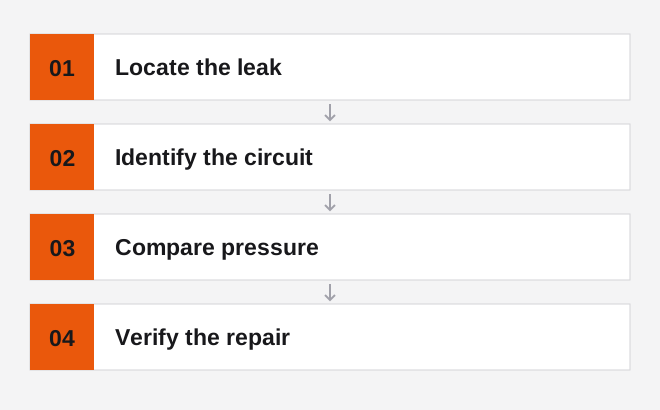
What a leak investigation should establish
Locate the first point of escape
The professional should distinguish the point where water originates from the place where it collects. Staining, corrosion trails, damp insulation, and the relationship to joints or fittings may guide inspection. Some checks require the appliance to cool or components to be made safe first. Do not remove insulation or reach beneath energized equipment to obtain a clearer photograph.
Identify the affected circuit
Hydronic heating water, steam condensate, domestic hot water, and combustion condensate belong to different systems or subcircuits. An appliance that supplies both space heating and tap water can contain more than one relevant path. The repair method, isolation requirements, and completion checks depend on identifying the correct source. A replacement seal should not be specified before that distinction has been made.
Compare readings through an operating cycle
Where safe and appropriate, the provider can compare cold and operating conditions against the manufacturer’s requirements and the installation’s needs. The gauge, expansion arrangement, water feed, and any discharge can be considered together. A reading without context is limited evidence. Ask which condition was abnormal and how the proposed repair is expected to change it.
Check for a contributing distribution fault
A leaking radiator valve or concealed heating loop may be part of the same complaint even when the boiler looks dry. The provider may need to assess separate zones rather than concentrating only on the appliance cabinet. Isolation testing and pressure testing are professional tasks that must account for equipment limits, temperatures, and other connected components; they are not homeowner trial-and-error procedures.
04 / SERVICE GUIDE
Protect yourself around leaking equipment
Keep away from hot water, steam, and electrical equipment exposed to moisture. If water is spreading near electrical components, do not walk into it to reach a switch. Seek appropriate urgent assistance and describe the situation from a safe location. Follow the appliance’s owner instructions only where you can do so safely; do not remove the cover, open a hot fitting, or attempt to stop a relief discharge with a plug.
Photographs can help show the external location and the extent of visible moisture, but they are optional and should never require entering an unsafe area. If you also notice a gas odor or a carbon monoxide alarm, leave the premises and contact emergency services or the gas utility from outside. A water leak does not rule out a separate combustion hazard.
Ready to discuss your heating problem?
Share the symptoms and confirm the next step with an independent provider.
05 / SERVICE GUIDE
Information to collect without dismantling anything
Write down when the moisture first appeared, the approximate amount, and whether it changes with heating or hot-water use. Note the make and model, the externally visible gauge reading, and any displayed error. Mention recent radiator work, a boiler service, a refill, or a part replacement because these events can help establish the sequence.
Avoid describing a system as “losing pressure” unless you have observed the reading change. A single low-looking number may be normal for a different system type or may come from an unrelated gauge. If you are unsure, describe the display exactly. The independent provider can determine what it measures and whether the value is meaningful.
06 / SERVICE GUIDE
Repair choices and what to confirm afterward
A quotation should identify the leaking component or circuit, the proposed replacement or repair, and whether draining and refilling are included. Ask how affected zones will be restored and whether water treatment needs assessment afterward. Where corrosion is extensive, the provider should explain the limits of a localized repair and distinguish immediate work from broader recommendations.
Afterward, ask for an explanation of the leak check and the pressure behavior observed during an appropriate operating cycle. A dry surface immediately after wiping is not sufficient evidence that an intermittent leak is resolved. Record the findings and any follow-up instructions. If the symptom returns, the timing and readings from the first visit help avoid repeating the same assumptions.
07 / SERVICE GUIDE
Questions about leaks and pressure
Is topping up a permanent repair?
No. Where the owner manual allows a particular refill procedure, that procedure does not explain why water was lost. Recurrent loss deserves diagnosis. Do not apply refill advice intended for a sealed hot-water system to a steam boiler or another configuration, and do not exceed the model-specific operating instructions.
Does a dripping relief valve always need replacement?
The valve may need work, but abnormal system pressure can also be involved. Ask whether the provider checked the cause of the discharge as well as the valve itself. Replacing the visible symptom without addressing the contributing condition may leave the complaint unresolved.
Can a leak be repaired without replacing the boiler?
Some external joints, valves, or pump-related components can be repaired independently of the boiler. Other defects may involve internal surfaces or widespread deterioration. The diagnosis, access, and availability of appropriate parts determine the options. Request a written explanation before making a replacement decision.
What if my radiators are also cold?
Mention both symptoms. Water loss, trapped air, or a circulation problem may affect heat distribution, but the relationship must be checked. Review radiator and baseboard repair and submit a service request with the full pattern. Availability and repair terms are set by the independent provider.
Sources & further reading
Manufacturer references illustrate model-specific requirements. Use the manual for your own equipment; these references are not universal repair instructions.
Take the next step.
Tell us where help is needed and what your system is doing.