
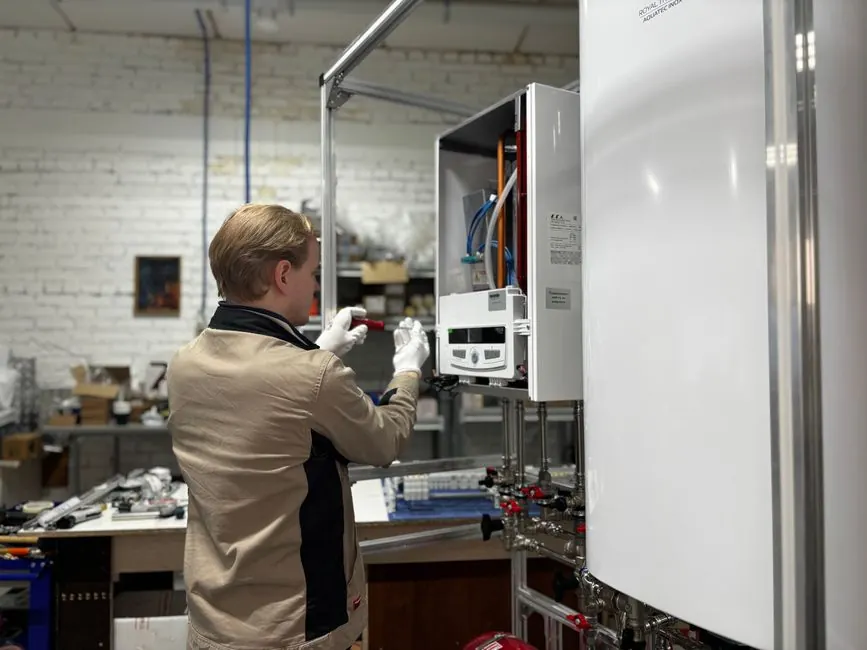
Learn what to observe when a boiler becomes noisy and what information helps a provider investigate.
A sound is a symptom, not a diagnosis
Banging, gurgling, whistling, or rumbling can have more than one cause. A description of the sound alone is not enough to identify a failed part. The boiler type and the point in the heating cycle when the noise occurs both matter.
Notice when and where it happens
Does the sound begin at startup, continue while heating, or occur when the system stops? Is it near the boiler, pipework, or a particular radiator? Note whether heating or hot water has also changed. These observations are more useful than trying to guess a repair.
Record visible information safely
If safely accessible, note the displayed fault code and gauge reading without opening the casing. Use the operating manual for your model; there is no single pressure range that applies to every boiler or steam system. Avoid repeated resets, fuel adjustments, and attempts to open hot components.
Mention related symptoms
A noise with a visible leak may warrant leak and pressure assessment. If the noise is localized to an emitter, review radiator and baseboard heating issues. Describe all symptoms to the provider rather than selecting a repair based only on the sound.
Ask for a professional assessment
Persistent or worsening noise, loss of heat, recurring lockouts, or leaks should be assessed by a provider familiar with your system. Ask them to explain the diagnosis, proposed repair, and price before authorizing work. For a heating interruption, explore urgent boiler service requests.
Useful details for your request
Include the make and model if known, the sound, when it started, any fault code, and whether the problem affects heating or hot water. Request service and confirm provider availability directly.